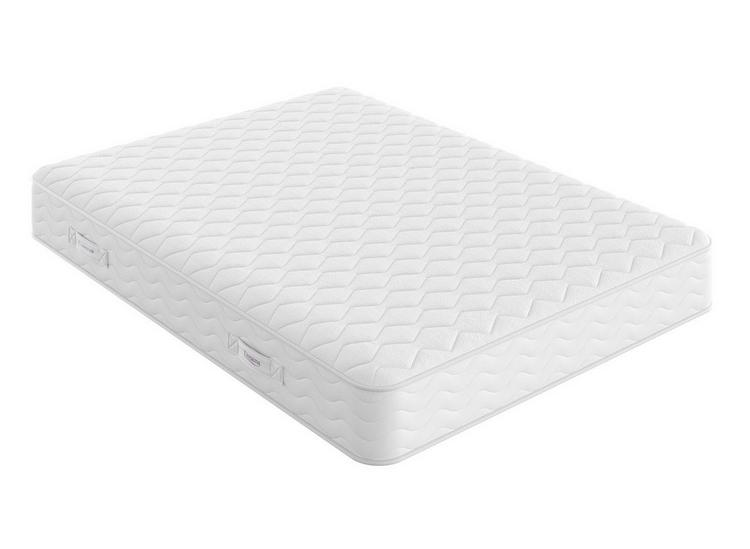
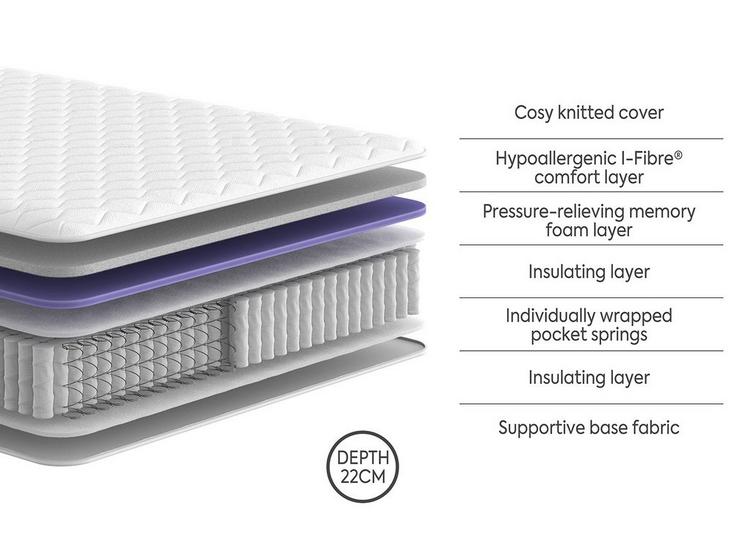
According to the Silentnight care guide, you will need to rotate it head to toe weekly for the first 3 months after using it, and then once a month afterwards.
How to Care for a No-Turn Mattress
Just because a mattress is labelled “no-turn” doesn’t mean it’s maintenance-free. While you don’t flip it over, you should still rotate it regularly — turning it 180° so the head becomes the foot. This helps distribute wear evenly and prevent body impressions from forming.
Here are a few essential care tips:
- Rotate every 1–3 months, depending on usage and manufacturer guidance
- Use a mattress protector to guard against spills and stains
- Air out the mattress occasionally by stripping the bedding and opening a window — this helps reduce moisture and prevent mould buildup
What happens if I turn a non-turn mattress?
If you decide to turn a non-turn mattress and sleep on it, you’ll notice that it won’t be as comfortable and may lead to a poor sleep experience and even back pain. In some cases, the “bottom side” might be firmer than the “top side”.
Keep in mind that some mattress warranties may be void, if you do not follow the care and maintenance instructions.
Conclusion: Which is better?
Ultimately, it’s hard to say whether no-turn or turn-able mattresses are better – it’s often down to personal preference. Some mattresses, for instance, should be turned depending on the season, as one side is better for hot weather, while the other performs better when it’s cold.
Equally, some of the best mattresses out there are no-turn, as the mattress technology is configured so that you enjoy the benefits only on one side of the sleep surface. It’s not enough just to buy a mattress because it’s no turn or turn-able – this should just be one of the factors that you take into account.
Other things you should consider before you buy a new mattress:
- What materials are used in manufacturing the mattress. For example: memory foam, pocket springs, Bonnell springs, wool, recycled fibres, etc.
- How firm the mattress is (soft, medium, or firm).
- What is the price of the mattress and how long is the guarantee (1-10 years).
- Does the mattress come with a home trial and free return policy. Check out our list of mattresses with free home trials.
If you have chosen a mattress that meets all your requirements, the fact that it is no-turn or turn-able shouldn’t make a huge amount of difference, providing you maintain it.


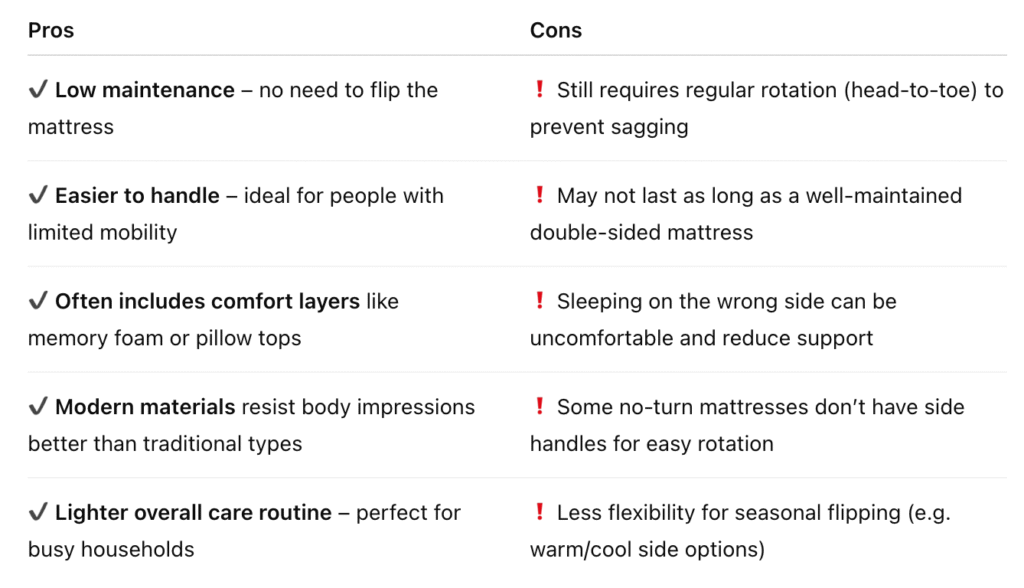
 Pros of No-Turn Mattresses
 Things to Keep in Mind